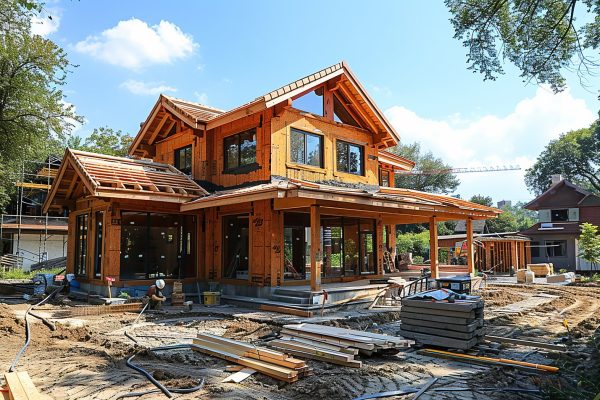

You love your neighborhood, your children’s schools, and the home you’ve spent years making your own. But your family needs more space, and buying a larger house in Southern California could mean taking on a significantly higher mortgage, leaving your community, or both.
TLDR
For homeowners in Long Beach, Lakewood, and Cerritos, building an accessory dwelling unit (ADU) or expanding an existing home can offer another option.
The challenge is figuring out how to pay for it.
An ADU or major home addition can easily become a six-figure investment, depending on the size, design, site conditions, and construction requirements. Fortunately, homeowners have several potential financing options, from home equity loans and renovation mortgages to specialized ADU financing programs.
The key is knowing what your project will actually cost before deciding how to finance it.
With a realistic construction estimate and the right financing approach, homeowners can make informed decisions about expanding their living space without immediately committing to selling their current home.
Financing an ADU or Home Addition in California
- ADU financing options include home equity lines of credit (HELOCs), cash-out refinancing, renovation loans, and specialized construction loans.
- Establishing a clear project scope and realistic construction estimate should come before choosing a loan.
- ADU cost and home addition cost depend on square footage, design, utilities, permitting, site conditions, and finishes.
- California has offered ADU grants, but availability changes. The former statewide $40,000 CalHFA grant program is not currently accepting new applications.
- Potential ADU rental income may help offset monthly loan payments, although lender qualification rules vary.
- Homeowners should budget for unexpected construction expenses and compare financing options based on total borrowing costs.
- A detailed estimate from an experienced contractor can help homeowners begin meaningful conversations with lenders.
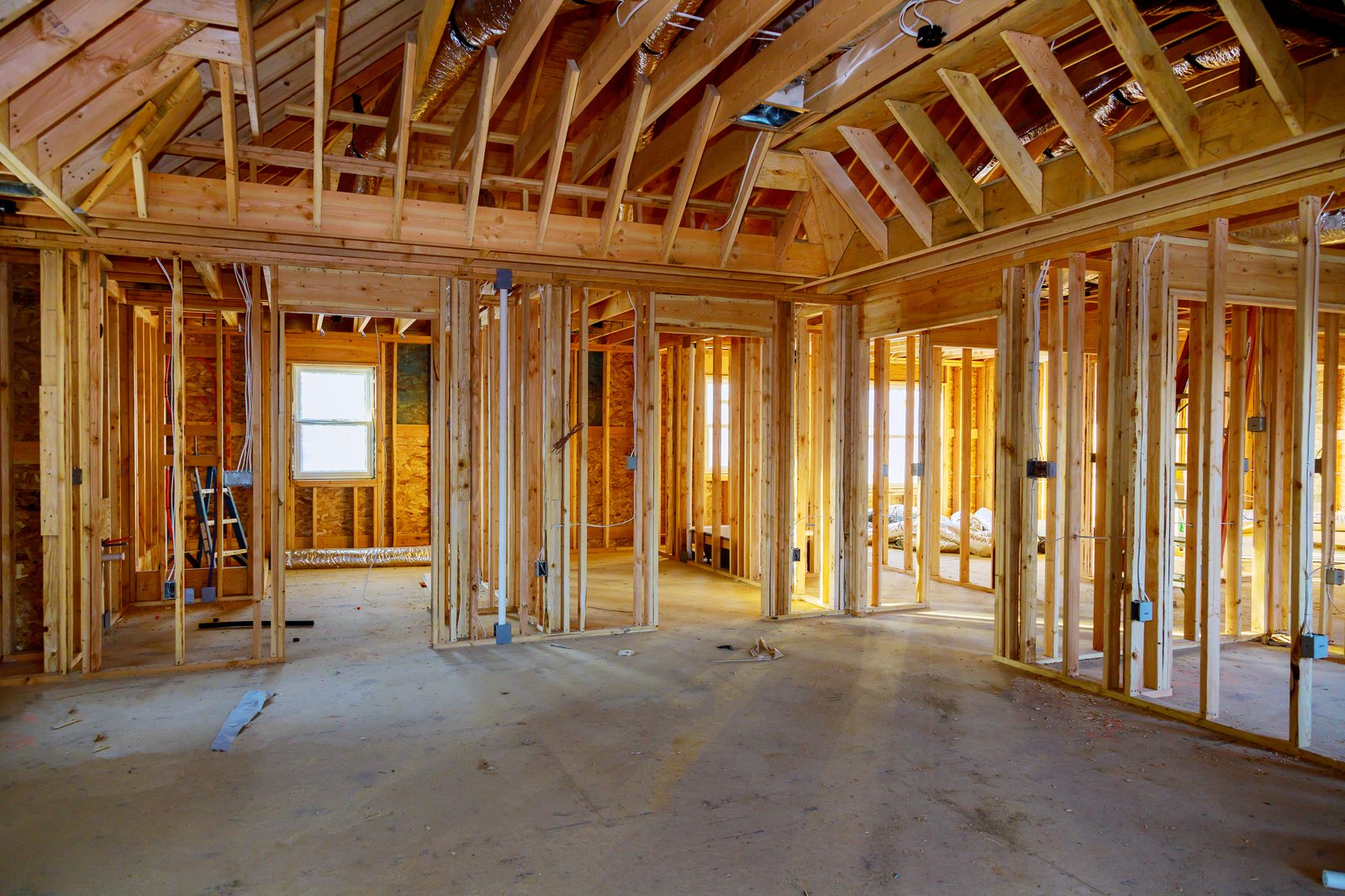
Start With the Project Cost, Not the Loan
When homeowners begin exploring ADU financing, they often start by asking how much they can borrow.
A better starting point is determining how much the project will actually require.
The difference matters because construction costs can vary significantly between properties, even when two homeowners are planning similar projects.
For example, a detached backyard ADU in Long Beach may require new utility connections, foundation work, and substantial site preparation.
A garage conversion in Lakewood might use an existing structure but still require structural modifications, insulation, plumbing, electrical upgrades, and other improvements.
A room addition in Cerritos may involve extending the existing roofline, modifying the foundation, and connecting the new space to the home’s current systems.
These projects can have very different budgets.
What Affects ADU Cost in California?
Several factors influence the total cost of building an accessory dwelling unit:
- Size and layout: Larger units generally require more materials and labor, although smaller units can still have substantial fixed costs.
- Construction type: Detached ADUs, attached ADUs, and garage conversions involve different construction requirements.
- Site preparation: Grading, demolition, drainage, and access conditions can affect costs.
- Utility connections: Water, sewer, gas, and electrical infrastructure may need upgrades or extensions.
- Permits and design: Architectural plans, engineering, permit fees, and required inspections should be included in the budget.
- Interior finishes: Cabinets, flooring, appliances, countertops, and bathroom fixtures influence the final price.
Home addition cost is affected by many of the same factors, along with the complexity of connecting new construction to an existing house.
Before applying for financing, homeowners should work with a contractor to define the project and develop a detailed estimate.
That estimate becomes the foundation for evaluating loan options and deciding what the household can comfortably afford.
ADU Financing Option 1: Home Equity Line of Credit (HELOC)
A home equity line of credit, commonly called a HELOC, allows qualifying homeowners to borrow against available equity in their property.
Instead of receiving the entire loan amount at once, homeowners typically have access to a revolving credit line during a designated draw period.
This can be useful for construction projects because expenses occur at different stages.
For example, a homeowner might use funds for design and permitting, followed by foundation work, framing, plumbing, electrical installation, and finishing.
Why Homeowners Consider HELOCs
A HELOC may offer:
- Access to funds as construction expenses arise
- Interest charges generally based on the amount borrowed
- Flexibility during the draw period
- The ability to keep an existing first mortgage in place
However, HELOCs frequently have variable interest rates.
That means monthly payments can increase if rates rise. Repayment terms may also change when the draw period ends.
Homeowners should understand the interest structure, repayment schedule, fees, and potential payment changes before borrowing.
A HELOC can be useful for ADU construction or a home addition, but it should be evaluated against the household’s existing mortgage and financial obligations.
ADU Financing Option 2: Cash-Out Refinancing
Cash-out refinancing replaces an existing mortgage with a new, larger mortgage.
The homeowner receives the difference, after applicable loan balances and closing costs, as cash that may be used for construction.
For example, suppose a homeowner has a property valued at $900,000 with a remaining mortgage balance of $350,000.
Depending on the lender’s loan-to-value requirements, credit qualifications, and other factors, the homeowner may be able to refinance and access a portion of the available equity.
Those funds could potentially be used to build an ADU or finance a home addition.
When Cash-Out Refinancing May Make Sense
Cash-out refinancing may appeal to homeowners who:
- Have substantial home equity
- Want access to a larger construction budget
- Prefer one primary mortgage payment
- Can obtain loan terms that fit their long-term financial goals
However, refinancing replaces the existing mortgage.
For homeowners who secured a particularly low interest rate several years ago, replacing that mortgage with a higher-rate loan could significantly increase the total cost of borrowing.
Closing costs and the length of the new loan also matter.
Before choosing this option, homeowners should compare the cost of refinancing their entire mortgage against financing only the construction project.
ADU Financing Option 3: Renovation and Construction Loans
Some financing programs are designed specifically for home improvements, renovations, and construction.
These loans can be particularly useful when a homeowner does not want to rely exclusively on existing home equity.
Fannie Mae HomeStyle Renovation Loans
The Fannie Mae HomeStyle Renovation mortgage allows eligible borrowers to combine certain renovation expenses with a home purchase or qualifying refinance.
Depending on the project and underwriting requirements, eligible improvements may include additional living space and ADU construction.
One potential advantage is that the lender may consider the property’s expected value after qualifying improvements are completed.
This can provide a different financing path from a traditional home equity loan.
However, HomeStyle Renovation loans have specific eligibility, appraisal, contractor, and project requirements.
Homeowners can review the program through Fannie Mae’s HomeStyle Renovation resources.
Construction Loans
Construction loans are another option for qualifying projects.
Depending on the lender and loan structure, funds may be released in stages as construction progresses.
The lender may require approved plans, a construction contract, inspections, and documentation before releasing funds.
Some construction loans are designed to transition into longer-term financing, while others require a separate loan or payoff after construction.
Because requirements vary, homeowners should compare the complete financing arrangement rather than focusing only on the initial interest rate.
ADU Financing Option 4: Specialized ADU Loans
As accessory dwelling units have become more common, some lenders have developed financing programs specifically for ADU construction.
These programs may differ from traditional home improvement loans in how they evaluate construction costs, property value, and potential rental income.
Depending on the lender, specialized ADU financing may consider:
- Existing home equity
- The property’s projected value after construction
- Expected construction costs
- The homeowner’s income and credit profile
- Potential rental income, when permitted under the loan program
Not every lender offers dedicated ADU loans, and not every program will be available for a particular property.
Homeowners should compare specialized programs with traditional financing options to determine which provides the most suitable terms.
The lowest advertised rate does not necessarily represent the lowest overall cost once fees, loan terms, and repayment requirements are considered.
Are There California ADU Grants or Incentives in 2026?
California has introduced several programs intended to encourage ADU construction and expand housing availability.
However, homeowners should be careful about relying on grant information that may no longer be current.
What Happened to the $40,000 CalHFA ADU Grant?
The California Housing Finance Agency previously offered an ADU Grant Program that provided up to $40,000 toward eligible predevelopment and certain closing costs.
Qualifying expenses included architectural designs, permits, soil tests, site preparation, surveys, and other eligible costs.
However, CalHFA states that the program’s latest funding allocation was fully reserved as of December 28, 2023.
As of October 2026, homeowners should not assume the $40,000 CalHFA grant is available for new applications.
The agency continues to publish program information, but that does not mean new funding has reopened.
Homeowners can check the official CalHFA ADU program page for updates.
Other California and Local Incentives
Some local jurisdictions and housing organizations offer financing assistance, technical support, or incentives for qualifying ADU projects.
Programs may prioritize affordable housing, lower-income homeowners, or units rented at restricted rates.
Homeowners in Long Beach, Lakewood, and Cerritos should check with their local planning or housing departments to determine whether any current programs apply to their property.
The California Department of Housing and Community Development also maintains information about potential ADU funding resources.
Because funding availability and eligibility can change, grants should be treated as a possible benefit rather than a guaranteed source of construction financing.
Can Rental Income Help Pay for an ADU Loan?
One of the potential financial advantages of building an ADU is the opportunity to generate rental income.
A homeowner who builds a detached backyard unit may eventually rent it to a long-term tenant, subject to applicable regulations.
That income can help offset the cost of financing construction.
Consider a simplified example.
A homeowner finances $200,000 of ADU construction costs through a 20-year loan at a hypothetical fixed interest rate of 7%.
The monthly principal and interest payment would be approximately $1,551.
If the completed ADU rents for $2,200 per month, the rent would exceed the loan’s principal and interest payment by approximately $649.
However, that difference is not necessarily profit.
The homeowner must also account for property taxes, insurance, maintenance, repairs, utilities when applicable, vacancies, and other ownership expenses.
The actual financial benefit depends on the property’s rental market, loan terms, and operating costs.
Can Expected Rental Income Help You Qualify for Financing?
Possibly, but the rules are more specific than simply telling a lender how much you expect to charge in rent.
Certain mortgage programs allow qualifying ADU rental income to be considered under defined circumstances.
Fannie Mae, for example, has guidelines governing the use of ADU rental income for eligible mortgage transactions.
Those rules can include documentation requirements, restrictions on eligible transactions, and limits on how much rental income can be used for qualification.
Homeowners should review the Fannie Mae ADU financing guidance and speak with lenders about the specific program they are considering.
A projected rental amount should never be treated as guaranteed income or automatic loan qualification.
What Do Lenders Look for When Financing an ADU?
Whether homeowners apply for a HELOC, renovation loan, or specialized ADU financing program, lenders generally want to understand two things:
Can the borrower afford the loan, and does the proposed project meet the program’s requirements?
Several factors commonly influence that decision.
Credit History and Credit Score
Lenders evaluate credit history to understand how borrowers have managed previous financial obligations.
Credit score requirements vary by lender and loan program.
Income and Debt-to-Income Ratio
Lenders typically review income, existing mortgage payments, credit cards, vehicle loans, and other debts.
A homeowner with substantial equity may still face financing limitations if the proposed monthly payment is too high relative to qualifying income.
Available Home Equity
For equity-based financing, the property’s value and existing mortgage balance are important.
Lenders may use an appraisal or another approved valuation method to determine how much equity is available.
Construction Plans and Estimates
Construction and renovation lenders may request:
- A detailed project scope
- Architectural plans
- An itemized construction estimate
- Contractor information
- A proposed construction schedule
- Permit documentation
- Property valuation or appraisal information
This is another reason to work with a qualified contractor before finalizing financing.
A clear construction estimate gives lenders more useful information than a general guess about what an ADU might cost.
How Much Should You Budget for Construction Overruns?
Even well-planned construction projects can encounter unexpected expenses.
A garage conversion may reveal structural issues that were not visible before work began.
A detached ADU might require additional utility work or site modifications.
A home addition may involve adjustments to existing plumbing, electrical systems, or structural connections.
These possibilities should be considered during budgeting.
Build a Construction Contingency Into Your Budget
A common planning approach is to reserve approximately 10% to 20% of the anticipated project cost for unexpected expenses, although the appropriate amount depends on the project and site conditions.
For example, if the construction estimate is $180,000, a 15% contingency would be:
$180,000 × 15% = $27,000
That creates a planning budget of $207,000 before any additional expenses not included in the original estimate.
A contingency is not a prediction that the project will exceed its estimate.
It is a financial safeguard that can help homeowners manage surprises without immediately needing additional financing.
Homeowners should also ask whether their lender requires a specific contingency reserve and how unused funds are handled.
Understand What Your Estimate Includes
Before comparing contractor estimates, ask whether the quoted price includes design, engineering, permits, utility connections, site preparation, construction materials, finishes, and other anticipated costs.
An estimate that appears lower may simply exclude expenses included in another proposal.
Comparing the complete scope provides a more accurate picture of home addition cost or ADU cost.

Why a Firm Construction Estimate Should Come Before Financing
Financing and construction planning should work together.
A homeowner may qualify to borrow $250,000, but that does not necessarily mean spending the full amount is appropriate.
Likewise, a homeowner may initially assume an ADU will cost $150,000, only to discover that their preferred layout, site conditions, and utility requirements create a substantially different budget.
A detailed estimate helps connect the design with the financial reality.
For homeowners in Long Beach, Lakewood, and Cerritos, that process generally begins with reviewing the property, discussing the intended use of the new space, and defining the project.
From there, the contractor can help develop an appropriate scope and estimate.
The homeowner can then take that information to lenders and compare financing options based on an actual project rather than an assumption.
This approach can also help homeowners make design decisions.
If a preferred ADU layout exceeds the available budget, the homeowner may be able to adjust square footage, finishes, or other design elements before construction begins.
For additional planning information, explore Tech Master Construction’s ADU services and room addition services, along with its guides to ADU construction and costs.
Frequently Asked Questions About ADU Financing in California
How do I finance an ADU in LA County?
Homeowners in Los Angeles County may explore HELOCs, home equity loans, cash-out refinancing, renovation mortgages, construction loans, and specialized ADU financing programs. The best option depends on available equity, income, credit, construction costs, and the intended use of the ADU. Obtaining a detailed contractor estimate before applying can help homeowners compare suitable financing options.
Are there ADU grants in California in 2026?
California previously offered a CalHFA ADU Grant Program providing up to $40,000 for qualifying expenses, but the latest funding allocation was fully reserved in December 2023. As of October 2026, that program is not accepting new applications. Other local assistance programs may exist, but homeowners should confirm current availability and eligibility with the administering agencies.
Can I use a HELOC to build an ADU?
Yes, qualifying homeowners may use a home equity line of credit to fund eligible ADU construction expenses. A HELOC allows borrowers to access available equity, often through draws during a designated period. Because many HELOCs have variable interest rates, homeowners should evaluate potential payment changes and repayment terms.
How much does an ADU cost in California?
ADU cost varies based on size, construction type, property conditions, utility connections, permitting, and finishes. A detached ADU may have different costs from a garage conversion or attached unit. A property-specific construction estimate is more useful than relying on a statewide average.
Can I use future ADU rental income to qualify for a loan?
Some mortgage programs permit eligible ADU rental income to be considered under specific circumstances. Requirements vary by loan product, and lenders may require rental appraisals, leases, or other documentation. Expected rental income is not automatically accepted for qualification.
Is financing a home addition different from financing an ADU?
Many of the same financing options can be used for both projects, including home equity loans, HELOCs, and qualifying renovation loans. However, an ADU creates a separate residential unit, while a home addition typically expands the existing residence. That distinction can affect design, permitting, appraisal, and financing requirements.
Should I get an ADU estimate before applying for financing?
Yes. A detailed estimate helps establish the amount of financing needed and provides lenders with information about the project scope, anticipated expenses, and construction requirements. Some lenders may also require plans, contractor documentation, and permit information before final approval.
Get a Firm Estimate for Your Lender With Tech Master Construction
Building an ADU or expanding your home can create valuable living space without requiring your family to leave the neighborhood you love.
But before comparing interest rates, applying for loans, or committing to a construction budget, it helps to understand exactly what you want to build and what the project is likely to cost.
Tech Master Construction works with homeowners throughout Long Beach, Lakewood, Cerritos, and surrounding Southern California communities on ADU construction and home additions.
Whether you’re considering a backyard rental unit, additional space for family members, or an expansion of your existing home, a consultation can help you explore the construction requirements and develop a realistic project budget.
Contact Tech Master Construction to discuss your project, review your options, and take the next step toward creating the space your home needs.